
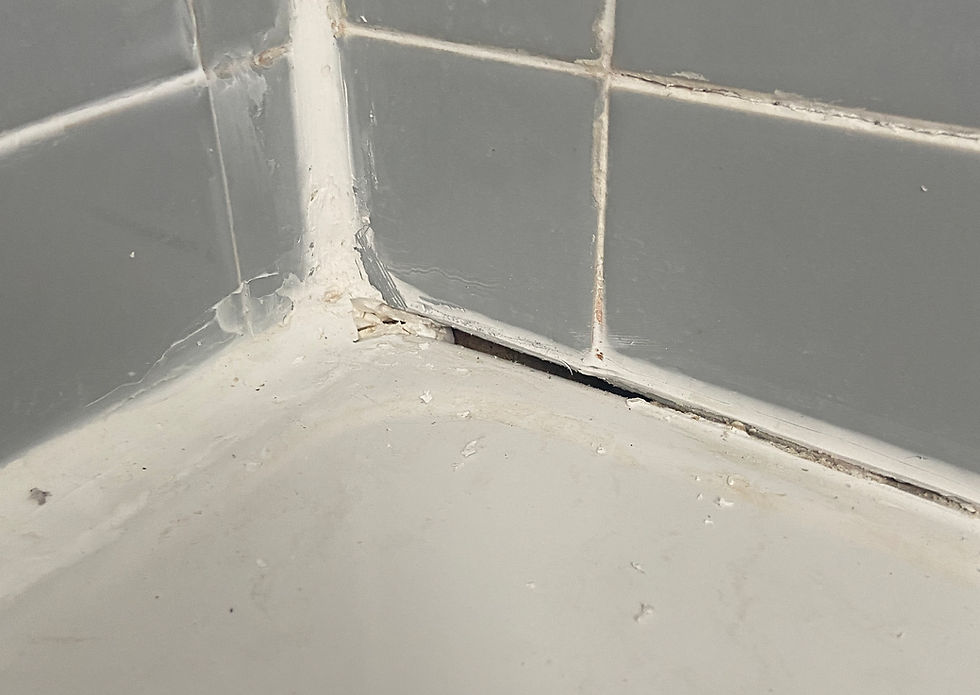
Bath seal replacement
A bath seal replacement might seem like a small job, but it's one of the most important maintenance tasks in any bathroom. A failed silicone seal can allow water to escape behind the bath every time it's used, leading to damaged plaster, stained ceilings, mould growth and costly repairs. If the bathroom is upstairs, even a small leak can eventually cause water damage to the room below.
At Brockley Builders, I don't believe in simply applying new silicone over the old. For a seal to last, every trace of the existing silicone must be completely removed. Even a small amount of old silicone left behind can prevent the new seal from bonding properly, creating a weak point where water can penetrate. Taking the extra time to remove all of the old material is one of the biggest differences between a long-lasting repair and one that fails within months.


The Right Products To Seal Baths and Showers
The quality of the sealant is just as important. Cheap silicone may save a few pounds initially, but it often shrinks, cracks or loses adhesion far sooner than professional products. I use premium-grade sealants, including 100% neutral cure silicone or hybrid polymer sealants, depending on the application. These products provide excellent flexibility, strong adhesion and long-term resistance to water, mould and everyday bathroom movement.
Correct application is equally important. Before sealing, all surfaces are thoroughly cleaned, dry and free from dust, soap residue and old sealant. The silicone is then worked deep into the joint between the bath and the tiles to ensure there are no hidden gaps behind the visible bead. A generous bead is applied so it forms a proper waterproof bridge between both surfaces before being finished with the correct profiling tool to produce a smooth, consistent seal.

Reasons For Failed Silicone Sealants
One step that is often missed is filling the bath with water before applying the silicone. The weight of the water allows the bath to settle into its lowest position. If the seal is applied to an empty bath, the bath may drop slightly once it's filled during normal use, stretching the silicone and creating tiny gaps that eventually allow water through. Sealing with the bath already loaded helps the joint accommodate normal movement and significantly improves the lifespan of the seal.
The area behind the bath taps is another common point of failure. It's often difficult to reach, which means many installers either leave gaps or fail to push the silicone fully into the joint. I use specialist tools that allow these awkward areas to be sealed properly, ensuring the waterproof barrier remains continuous around the entire bath.
What you need to know about My Bath Silicone Sealant Service
A professionally carried out bath oe shower seal replacement doesn't just improve the appearance of your bathroom—it protects the structure of your home. By removing every trace of the old silicone, using high-quality sealants, applying them correctly and paying close attention to vulnerable areas, you can greatly reduce the risk of leaks, damp and expensive water damage in the future.
Let’s Work Together
Get in touch so we can start working together.